Buy Kashmiri Saffron: Quick Answer
To buy Kashmiri saffron that is real, I check four things: the GI tag with Pampore or Kashmir origin, the grade, a fresh harvest date and the FSSAI number. Then I test one thread in warm water when the pack arrives.
- Mongra for mithai and kesar doodh, Lacha for daily kahwa
- Fair price: about ₹400–900 per gram (checked Nov 2026)
- Buy only what you will use in a year
Some links on this page are Amazon affiliate links. If you buy through them, I may earn a small commission at no extra cost to you.
1. Know what you are buying
Kashmiri kesar is the dried red stigma of the saffron crocus, grown mainly around Pampore. Since 2020 it carries a GI tag, so only saffron grown in Kashmir can be sold as “Kashmir saffron”.
- Iranian or Afghan saffron is real saffron, just not Kashmiri
- The problem is mislabelling, not imported saffron
- More about the region: Pampore saffron
In my family we buy kesar almost every other month, and never miss it before Diwali. My father crushes the strands into milk for his Diwali panchmeva kheer, which we share as prasad after the puja.
2. Pick the grade for the job
You do not always need the costliest grade. Match the grade to what you are cooking.
- Mongra: red tips only, for mithai, phirni, kesar doodh and gifting
- Lacha: red with a little yellow, for daily kahwa and chai
- Guchhi: whole threads tied in a bunch, the traditional form
- Full comparison: Kashmiri saffron grades
3. Know a fair price
Price per gram tells you a lot. If it looks too cheap for “Kashmiri”, it usually is.
- Mongra: about ₹600–900 per gram (checked Nov 2026)
- Lacha: about ₹400–600 per gram (checked Nov 2026)
- Under ₹250 per gram for “Kashmiri” is a red flag
- Full table and why prices move: saffron price per gram
My last kesar came straight from Kashmir at ₹720 per gram.
4. Read the label
A good pack answers your questions before you ask. If the label is vague, I put it back.
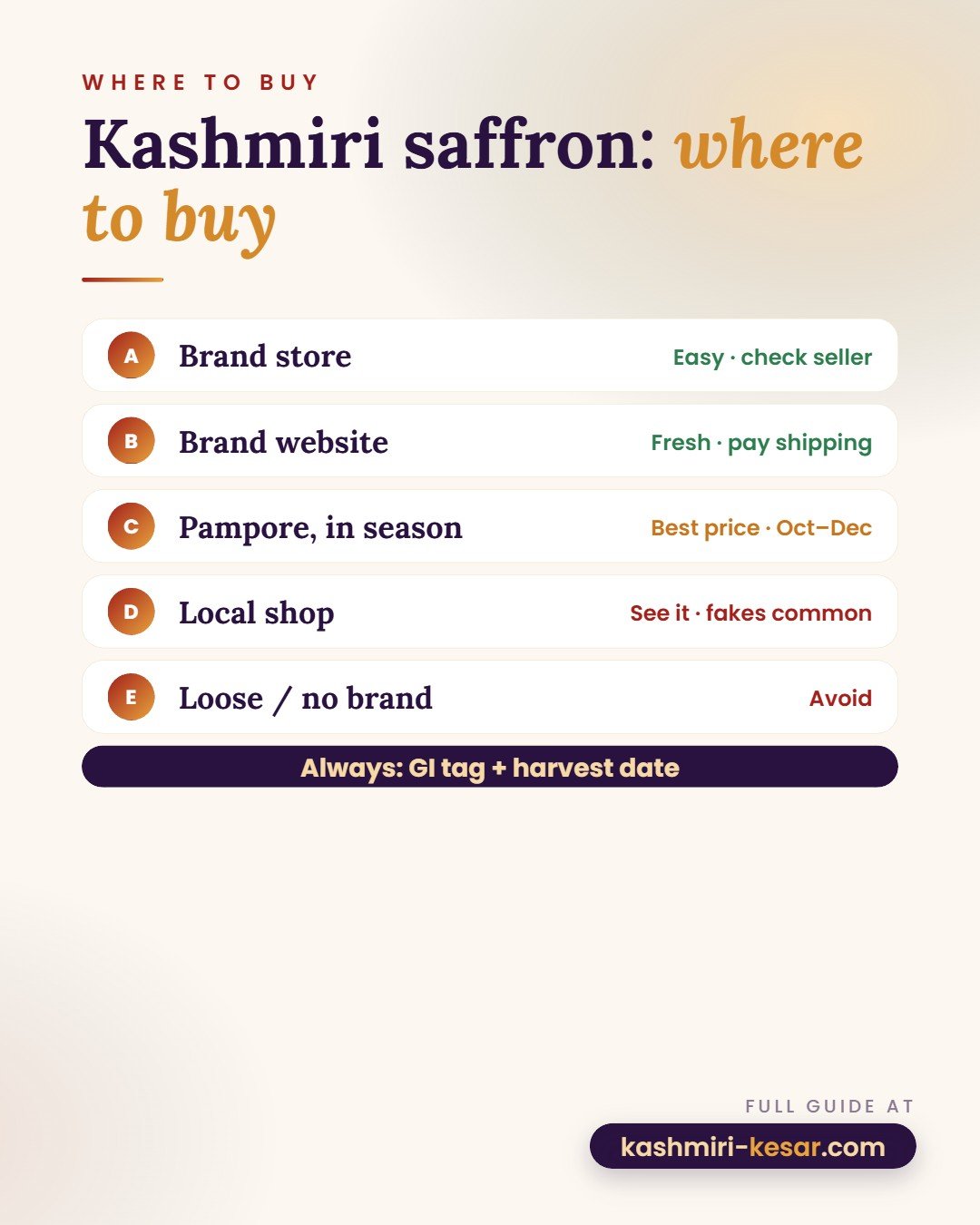
- GI logo or clear “Kashmir / Pampore” origin
- Harvest or packing date (the new crop is packed from late October)
- Grade named (Mongra or Lacha), not just “premium”
- FSSAI licence number, net weight in grams, seller name and address
- Airtight, dark pack, because light fades kesar
5. Choose where to buy
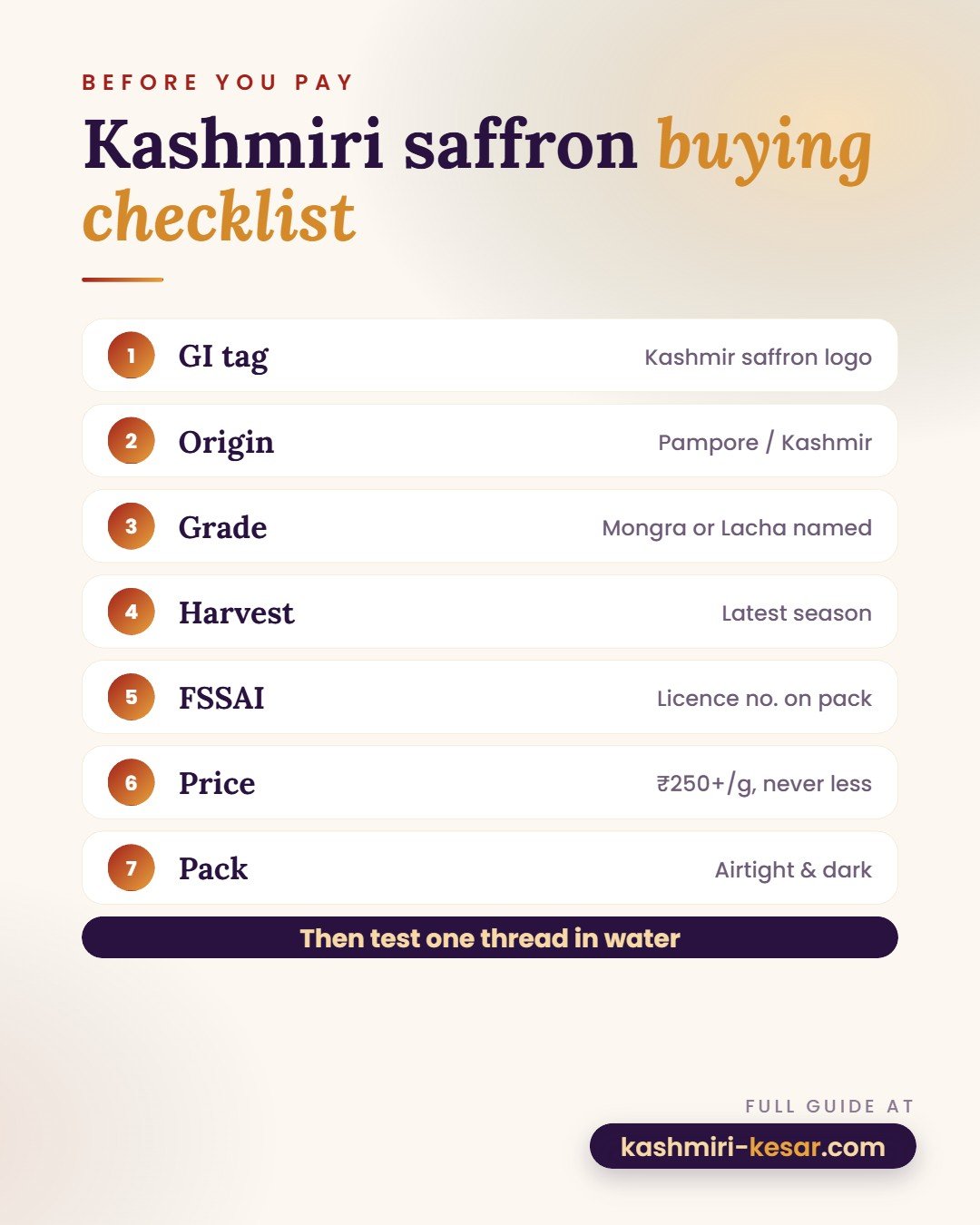
Where you buy Kashmiri saffron matters as much as what you buy. I prefer sellers who show origin, grade and date.
- Amazon brand store: easy returns. Check that “Sold by” is the brand or a known seller
- Brand website: often the freshest stock and batch details
- Pampore in season (Oct–Dec): best price, if you visit
- Loose, unbranded kesar: skip it. No origin, no grade
6. My 2-minute Amazon routine
This is the routine I follow before I buy Kashmiri saffron online.
- Search brand + grade (e.g. “Kashmiri Mongra saffron”), not just “saffron”
- Check “Ships from” and “Sold by”
- Look for the GI logo, grade, net weight and FSSAI number in the photos
- Sort reviews by most recent and look for water-test photos
- Compare price per gram, not pack price
- Check the return window
7. Buy the right amount
Kesar is used a chutki at a time, so a small pack lasts long. Fresh aroma fades after about a year.
- 1 g: about 15–20 cups of kahwa or several family desserts
- 2–5 g: families who use kesar every week, or the Diwali and wedding season
- For festivals, buy 2–3 weeks early. Good packs sell out
How much kesar for each dish
Start small. You can always add a thread or two next time.
- Kesar doodh: 4–5 threads per glass
- Kahwa or kesar chai: 2–3 threads per cup
- Phirni or kheer: 12–15 threads per litre of milk
- Biryani: about 15 threads for 4 servings
- Recipes: kesar doodh, kahwa, phirni, biryani
Buying kesar as a gift
Kesar is a lovely Diwali, wedding or Eid gift because it feels special and keeps well.
- Choose Mongra in a glass jar or tin
- Check the harvest date. Fresh kesar smells sweet, like honey and hay
- Tuck in a kesar doodh recipe card so it gets used
Test it when it arrives
Even a good brand can send a bad batch. One thread in warm water tells you a lot.
- Real kesar turns water golden-yellow slowly, and the thread stays red
- All 7 tests: how to identify pure Kashmiri kesar
My last pack passed the water test: the colour came out slowly and stayed golden.
If you get a fake pack
Do not just throw it away. Keep proof and report it.
- Record the water test on video
- Ask for a return within the window
- Report the listing with photos
- Complain to FSSAI through the Food Safety Connect app if it is mislabelled
Store it right
Good storage keeps the aroma for months.
- Airtight glass jar or the original sealed tin
- Away from light, heat and steam, so a drawer, not near the gas
- Do not keep an open pack in the fridge, because moisture spoils it
Which brand?
Want names to start with? I compare five popular packs in my best saffron brands in India guide.
How to Buy Kashmiri Saffron: FAQs
Where can I buy real Kashmiri saffron?
From a brand’s own website or official Amazon store that shows the GI tag, Pampore origin, grade and harvest date. In season, you can buy directly in Pampore.
Where can I buy pure saffron with verified quality?
Choose a brand that shows the GI tag, a batch or harvest date and, ideally, an ISO 3632 lab report for that batch. Buy from its own website or official Amazon store, then do the water test at home.
How do I know if it is GI-tagged?
Look for the Kashmir saffron GI logo and origin on the pack. If unsure, ask the seller for batch details.
What is a fair price for 1 gram?
About ₹400–600 for Lacha and ₹600–900 for Mongra (checked Nov 2026). Under ₹250 is a warning sign.
Which grade should I buy?
Mongra for mithai, kesar doodh and gifting. Lacha for everyday kahwa and cooking.
Is it safe to buy Kashmiri saffron on Amazon?
Yes, if the seller is the brand or a known seller and the listing shows origin, grade and date. Test it when it arrives.
How long does saffron last?
Stored airtight and dark, it keeps its best aroma for about a year.
Source: S.S. Rana & Co. on the Kashmir saffron GI tag.