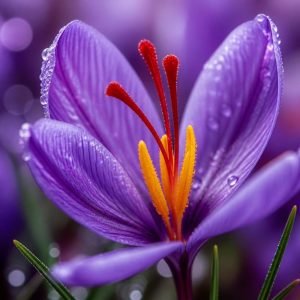
Saffron Benefits: Quick Answer
Saffron benefits, in short: small trials suggest kesar may help with low mood and PMS, with early signs for eye health. These studies used measured extract doses for a few weeks, not a few threads in doodh.
- Saffron is a food, not a cure
- Never stop or change prescribed medicine without your doctor
- Pregnant, nursing or on medicine? Ask your doctor before taking supplements
Some links on this page are Amazon affiliate links. If you buy through them, I may earn a small commission at no extra cost to you.
What is in kesar?
Saffron threads carry natural compounds that give their colour, taste and aroma. Most research on saffron benefits looks at these three.
- Crocin: the golden colour
- Picrocrocin: the slightly bitter taste
- Safranal: the honey-like aroma
Study doses vs kitchen use
Most trials on saffron benefits used about 20–30 mg a day of saffron extract or powder in capsules. That is a measured dose, not the same as cooking.
- A few threads in kesar doodh or kahwa is a food amount
- Do not try to match study doses at home without a doctor
- More is not better
1. Mood
This is the most studied area. A 2013 meta-analysis of small, short trials found saffron improved mild-to-moderate low mood compared with placebo.
- Trials were small and lasted around 6–8 weeks
- It is not a replacement for treatment
- Talk to your doctor before trying it for mood
2. PMS
A small 2008 double-blind trial gave women with PMS 30 mg of saffron a day. They reported fewer symptoms than the placebo group over two cycles.
- One small trial, so treat it as promising, not proven
- Ask your doctor before using supplements
3. Eye health
A small 2010 study in people with early age-related macular degeneration found modest changes in retinal response with 20 mg of saffron a day.
- Very small study, more research needed
- Not a substitute for an eye doctor’s advice
4. Antioxidant effects
Crocin and safranal may have antioxidant effects in lab and small human studies. Results vary.
- Do not rely on saffron as a health treatment
5. Traditional skin use
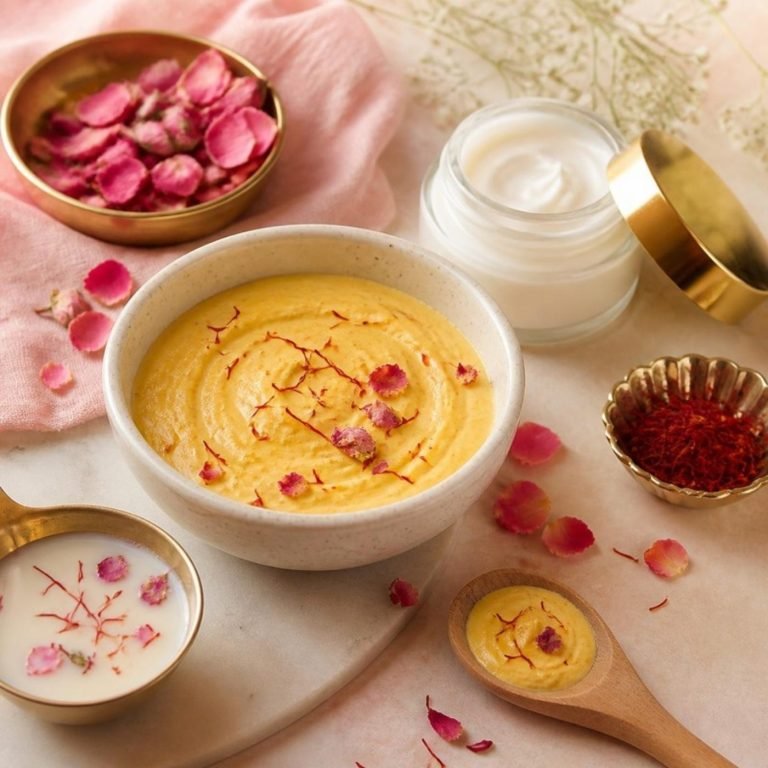
In India, kesar has been used in skincare for generations. Scientific evidence is limited.
- For a gentle home pack, see my kesar face pack. Patch-test first
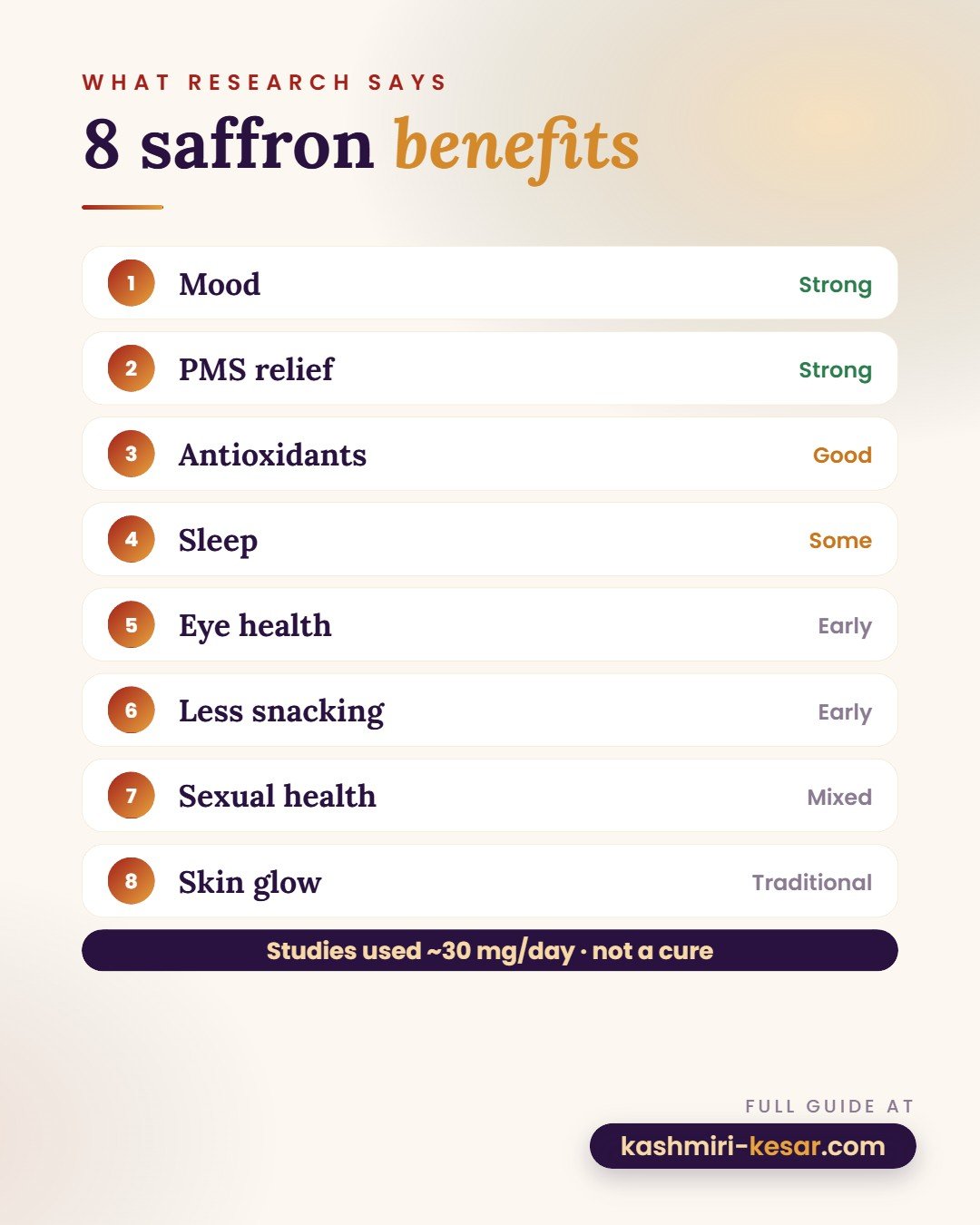
Saffron benefits: evidence at a glance
| Area | What research shows | What studies used |
|---|---|---|
| Mood | Small trials, promising | ~30 mg/day, 6–8 weeks |
| PMS | One small trial | 30 mg/day, 2 cycles |
| Eye health | Early, very small | ~20 mg/day |
| Antioxidant | Mixed | Various |
| Skin | Traditional use only | Home use |
- This is a simple summary, not medical advice
Enjoying kesar every day
In my kitchen, kesar is about flavour, colour and a festive feel. That is how I suggest you enjoy it.
- Soak 3–5 threads in warm milk or water for 10–15 minutes
- Add to kahwa, kesar doodh, phirni or biryani
- Make sure it is real: 7 home tests
Safety
Food amounts are considered safe for most people. Large doses are not.
- A few threads a day in food is normal
- Very high doses (around 5 g or more) can be toxic
- Pregnant or breastfeeding: avoid supplement doses and ask your doctor
- On medicine for mood, blood pressure or blood thinning: check with your doctor first
This article is for general information only and is not medical advice. Please consult a qualified doctor before using saffron for any health condition.
Saffron Benefits FAQs
Kesar ke fayde kya hain? What does research say?
Small trials suggest kesar may help mood and PMS, with early signs for eye health. More research is needed. In the kitchen, its main gift is colour, aroma and flavour.
What happens if I take saffron every day?
A few threads a day in food is a normal, common habit for most adults. Daily supplement doses are different, so ask your doctor first.
1 din mein kitna kesar lena chahiye?
In food, 2–5 threads a day is a usual amount. Studies used about 20–30 mg of extract a day, but take supplements only with your doctor’s advice.
Who should not take saffron?
Pregnant or breastfeeding women (supplement doses), people with bipolar disorder, low blood pressure or bleeding problems, and anyone on regular medicine should ask a doctor before taking more than food amounts.
Does saffron have side effects?
Food amounts rarely cause problems. Large doses may cause nausea, dizziness or dry mouth, and very high doses (around 5 g or more) can be toxic. Rarely, people are allergic.
What should I not mix saffron with?
Do not combine saffron supplements with blood thinners, blood pressure medicine or antidepressants without your doctor’s advice. In cooking, it mixes well with milk, rice and tea.
How much saffron did studies use?
About 20–30 mg a day of extract. A few threads in food is a different, smaller amount. Ask your doctor before taking supplements.
Is it safe to drink kesar doodh every day?
A cup with a few threads is a common food habit and is generally considered safe for most adults.
Pregnancy mein kesar le sakte hain?
A few threads in food are traditional in many Indian homes, but large or supplement doses should be avoided in pregnancy. Always ask your doctor first.
Does fake saffron have the same effects?
No. Dyed or fake saffron does not contain the same compounds. Test your kesar at home.
If you cook with kesar, you can compare genuine Kashmiri packs here:
Sources (PubMed):
- Hausenblas et al., 2013: saffron and depression meta-analysis. https://pubmed.ncbi.nlm.nih.gov/24299602/
- Agha-Hosseini et al., 2008: saffron for PMS (BJOG). https://pubmed.ncbi.nlm.nih.gov/18271889/
- Falsini et al., 2010: saffron and retinal flicker sensitivity in early AMD. https://pubmed.ncbi.nlm.nih.gov/20688744/